
A Deep Dive into Early Coding with Scratch and Scratch Jr.
Hey Brooklyn parents! In today’s digital age, coding has become a fundamental skill, akin to reading and writing. As technology increasingly becomes a staple in our daily lives, the ability to understand and manipulate the digital world is becoming more crucial. This leads many parents to ask, “When is the right time for my kids to start learning to code?” As a parent and the COO of Brains & Motion Education, I spend a lot of time thinking about STEM & coding education. Today, we’ll explore why early coding education is important, and how platforms like Scratch and Scratch Jr. can offer a head start in developing this essential skill.

The Importance of Early Coding Education
Coding is not just about writing lines of code; it’s about so much more! It’s about problem-solving, creativity, and logical thinking. Introducing children to coding at an early age can help develop these vital skills, which are applicable in nearly every field. Studies suggest that children can grasp complex concepts much easier when they’re younger, and this definitely applies to coding. The earlier they start, the more seamlessly they can integrate their understanding of technology into their everyday lives.
Understanding Scratch and Scratch Jr.
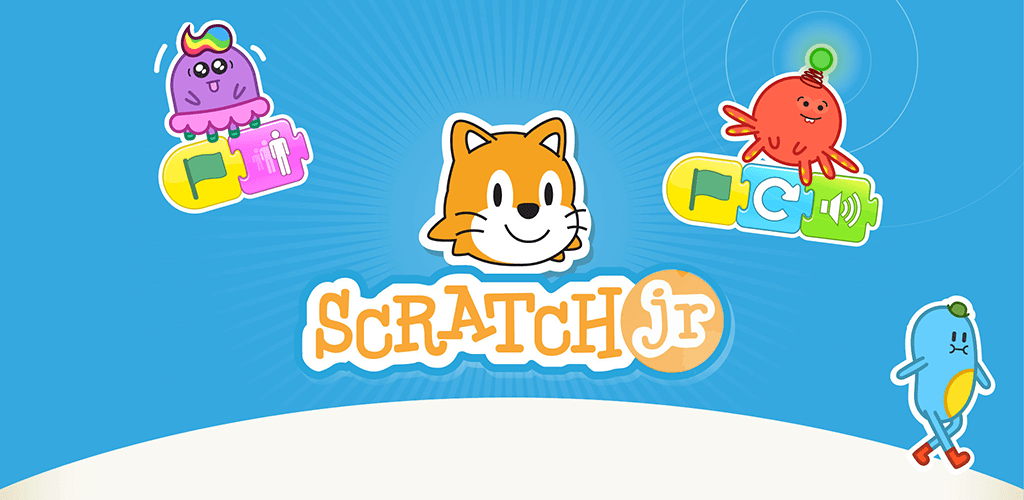
Before we dive into when kids should start learning to code, let’s understand the tools at their disposal. Scratch and Scratch Jr. are revolutionary platforms designed at MIT to introduce children to the world of coding through interactive stories, games, and animations.
Scratch Jr. – Tailored for Young Minds (Ages 5-7)
Scratch Jr. is an introductory programming language that enables young children (ages 5-7) to create their own interactive stories and games. By snapping together graphical programming blocks, children learn the fundamentals of coding sequences and logical thinking without the need to understand text-based code. The platform is designed to be intuitive for children in preschool and early elementary school, making it a perfect starting point for coding education.
Scratch – Expanding the Horizon (Ages 8 and Up)
For children ages 8 and above, Scratch offers a more advanced platform. While it retains the drag-and-drop interface, it introduces more complex concepts like variables, loops, and conditionals. Scratch not only allows kids to create games and animations but also fosters a global community where they can share their projects and learn from others. This community aspect encourages critical thinking and peer learning, which are invaluable skills in any educational journey.

When to Start: Finding the Right Age
Deciding when your child should start learning to code with Scratch or Scratch Jr. depends on several factors, including their interest, maturity level, and cognitive abilities. Here are some considerations:
- Interest and Engagement: Children who show an early interest in technology, puzzles, and games might be ready to start coding with Scratch Jr. as early as 5 years old. Interest and engagement are key factors in their learning process.
- Cognitive Skills: Scratch Jr. is designed to help develop cognitive skills through problem-solving and basic logic. If your child enjoys solving puzzles or building with blocks, they’re likely ready to start coding.
- Transition to Scratch: As children grow and their cognitive abilities develop, they can transition from Scratch Jr. to Scratch. This usually happens around the age of 8, but some kids may be ready to make the leap earlier.

Advantages of Starting Early
Introducing children to coding through Scratch and Scratch Jr. provides several advantages:
- Enhances Problem-solving Skills: Coding teaches children to break down complex problems into smaller, manageable parts and to use logic to find solutions.
- Boosts Creativity: By designing their own projects, children can express themselves creatively in a digital format.
- Encourages Persistence: Learning to code teaches children that failure is just a step towards success. Debugging their code helps them develop persistence and resilience.
- Prepares for the Future: Coding is a skill that will only become more important in the future job market. Starting early gives children a head start.

Practical Tips for Parents
- Explore Together: Start by exploring Scratch Jr. or Scratch together with your child. This can be a bonding experience and helps you understand the platform.
- Encourage Creativity: Encourage your child to think creatively and come up with their own project ideas. There’s no right or wrong in coding, only learning and fun.
- Provide Resources: Aside from Scratch and Scratch Jr., provide them with books, online resources, and perhaps even enroll them in coding camps designed for kids.
- Foster a Learning Community: If possible, connect with other parents whose children are learning to code. This can provide a supportive community for both you and your child. Enrolling your kids in a coding summer camp is also a great way to get them involved.

Brains & Motion Special Offer
If you are interested in sending your kids to a Brains & Motion Summer Camp to learn coding. I have a special discount code for you KK100 for $100 off camp! In NY we have camps at NYU, Adelphi, Stonybrook, as well as locations across the country.
Final Thoughts
The best time to start learning to code is as soon as a child shows interest and is able to engage with the concepts in a meaningful way. Scratch and Scratch Jr. offer accessible, engaging platforms that can ignite a passion for technology and innovation in young minds. By starting early, children can develop not just coding skills but a wide array of cognitive abilities and soft skills that will benefit them for a lifetime. Remember, the journey of coding is not just about the destination; it’s about the problems solved, the creativity unleashed, and the fun had along the way. Start this journey with your child today, and open up a world of endless possibilities for their tomorrow.
 A Brooklyn Dad
Leave a comment